After isolating myself for such a long time I began to realize that nobody else has anything to do with the way I feel. I always thought I was disliked by everyone and I cherry-picked every little detail about what other people did so I could rationalize my illusions about how other people felt about me.
My complaints and inappropriate reactions to what other people did were all based on the illusion that external events were the cause of my feelings. So what is the real cause? Just my natural brain chemistry, imbalanced, creating a permanent state of hopelessness with rare bouts of normal, whatever that is.
This is true for everyone. Our perceptions of events and people are colored by the present balance of brain chemistry and brain physiology determined primarily by our genetics. Beyond our genetics, our Neurological Makeup was influenced by outside things like chemicals or radiation, malnutrition and stress on one or both parents.
Evolution dictates that our genes were influenced by the environment of our parents and their parents too, all the way back to the beginning.
We all see the same basic colors, but knowing that some people are color-blind tells me that none of us may see the exact same shade of any color.
Think about the way other people look at you? You are responsible for how you feel. Apparently some authority figures have yet to grasp the concept that emotions are a personal responsibility, such as the incident that occurred in Florida: 14-year-old-tackled-choked-giving-police-dehumanizing-stare . The only dehumanizing was in the mind of the officer.
Friday, June 7, 2013
Friday, April 26, 2013
Reading Semiotics
As someone who has great difficulty connecting with people I think about it all the time. I have an undergraduate degree in Communication, spanning both mass media technology and professional interpersonal communication. Learning about it may improve my ability to go through the motions, but that's about it. It's not going to significantly change my brain chemistry to alleviate my chronic anxiety.
I'm fascinated by human perception and behavior. Working on one of my COM papers led me to discover Semiotics, the study of signs and symbols and their use or interpretation. I'm reading Semiotics: The Basics by Daniel Chandler. A good companion would be something on Operant Conditioning and memory.
One day in the college cafeteria I overheard a group of students making fun of someone they knew but who was not present. Having a long history of being the subject of such gossip I have experience observing changes in the behavior of people who associate directly and even indirectly with the instigators of humor at the expense of someone else and the expense of myself.
Specifically, subordinates in a group who wish to show their loyalty to the leader will adopt the attitude of the leader toward a target (someone). Some members on the perimeter of the group will outwardly laugh at the leader's joke about the target, but find themselves harboring feelings of guilt for doing so. When they see the target every day, the memory of the joke with all its emotional baggage resurfaces. Their behavior changes significantly toward that person. They keep their distance, avoid eye contact or avoid the same areas or activities.
After a significant passage of time, the original joke may have been forgotten, but the emotional baggage is reinforced. After the memory of the initial event has faded, the remaining emotions that are triggered by the sight of the target must be rationalized. Some new reason must be created to explain why they feel the way they do about the target.
I call it Causal Drift. It's probably called something else, but the idea stems from how memory operates.
I assume couples break up over it. Someone says something hurtful but the other person lets it slide without saying expressing how they feel about what was said, the incident is forgotten, but the emotion is still there, and they accumulate.
It's not like this for everyone. A few lucky people can remember every detail and easily compartmentalize their emotions, but many people do not and are vulnerable to manipulation by cult-leaders, politicians and the mass media.
They are the ones who wind up voting against their own interests, developing paranoia-fueled conspiracy theories, or foaming at the mouth as they gyrate wildly, kicking over folding chairs at political town hall meetings.
I'm fascinated by human perception and behavior. Working on one of my COM papers led me to discover Semiotics, the study of signs and symbols and their use or interpretation. I'm reading Semiotics: The Basics by Daniel Chandler. A good companion would be something on Operant Conditioning and memory.
One day in the college cafeteria I overheard a group of students making fun of someone they knew but who was not present. Having a long history of being the subject of such gossip I have experience observing changes in the behavior of people who associate directly and even indirectly with the instigators of humor at the expense of someone else and the expense of myself.
Specifically, subordinates in a group who wish to show their loyalty to the leader will adopt the attitude of the leader toward a target (someone). Some members on the perimeter of the group will outwardly laugh at the leader's joke about the target, but find themselves harboring feelings of guilt for doing so. When they see the target every day, the memory of the joke with all its emotional baggage resurfaces. Their behavior changes significantly toward that person. They keep their distance, avoid eye contact or avoid the same areas or activities.
After a significant passage of time, the original joke may have been forgotten, but the emotional baggage is reinforced. After the memory of the initial event has faded, the remaining emotions that are triggered by the sight of the target must be rationalized. Some new reason must be created to explain why they feel the way they do about the target.
I call it Causal Drift. It's probably called something else, but the idea stems from how memory operates.
I assume couples break up over it. Someone says something hurtful but the other person lets it slide without saying expressing how they feel about what was said, the incident is forgotten, but the emotion is still there, and they accumulate.
It's not like this for everyone. A few lucky people can remember every detail and easily compartmentalize their emotions, but many people do not and are vulnerable to manipulation by cult-leaders, politicians and the mass media.
They are the ones who wind up voting against their own interests, developing paranoia-fueled conspiracy theories, or foaming at the mouth as they gyrate wildly, kicking over folding chairs at political town hall meetings.
Sunday, April 21, 2013
Food worries and a strange toenail demarcation.
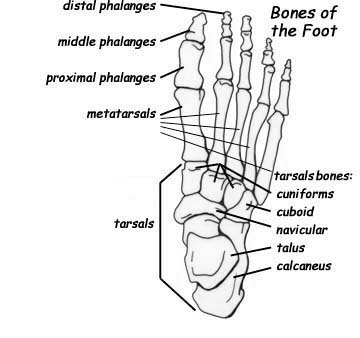
For the last couple of weeks I've been food-binging. The really nice thing is that my gout doesn't appear to be coming back. I still feel a slight twinge from time-to-time, but nowhere near the crippling sensation of a screwdriver twisting between the bones behind my big toes (between the tarsals and metatarsals)
. I think my liver and kidney function may be back to normal. But still, I've been eating way too much. I tell myself "I'm not going to eat today" and of course it doesn't work.
Before I moved out to Washington I was really sick. I had a job working nights forty five miles away from home and because it was impossible to sleep during the day I had to force myself to stay in bed for twelve hours just to get the sleep I needed. I finally quit after working too many double-shifts. The icing on the cake was injuring my back while packing my car for the trip to Washington. My back hurt so bad I had to lean forward and stretch my lumbar region while driving. My gout was flaring at increasing rates or staying longer too.
At one point I had to put my plans on hold for a week and was stranded in a hotel bed for four days without food because I ran out. I could barely make it to the bathroom. I did not eat for four days. Moving into my apartment on the second floor was painful and I required a crutch for the first couple of weeks.
I struggled with pain throughout the summer and fall of 2012. It took at least five months for me to mostly recover from a night schedule except I'm still in the habit of spending too much time in bed. One night just after Christmas of 2012 my left knee which has been bothering me since I bent it sideways playing Volleyball back in the late 1990s stopped hurting. My back stopped hurting at the same time. The pain didn't completely subside, but enough that I could put on pants while standing freely. My gout decreased in frequency and intensity.
Last week I noticed a strange demarcation of thickness in my big toenail. It suddenly became thinner by what seems like a millimeter, at about half the distance from the cuticle to the end, from being extremely thick to being almost normal. According to Wikipedia, toenails usually take twelve to eighteen months to completely grow out, so I'm wondering if moving away from Springfield, Illinois also moved me away from a substance that was making me sick? Something in the water, perhaps?
| My gout usually appeared between the metatarsals and tarsals or the metatarsals and proximal phalanges |
Before I moved out to Washington I was really sick. I had a job working nights forty five miles away from home and because it was impossible to sleep during the day I had to force myself to stay in bed for twelve hours just to get the sleep I needed. I finally quit after working too many double-shifts. The icing on the cake was injuring my back while packing my car for the trip to Washington. My back hurt so bad I had to lean forward and stretch my lumbar region while driving. My gout was flaring at increasing rates or staying longer too.
At one point I had to put my plans on hold for a week and was stranded in a hotel bed for four days without food because I ran out. I could barely make it to the bathroom. I did not eat for four days. Moving into my apartment on the second floor was painful and I required a crutch for the first couple of weeks.
I struggled with pain throughout the summer and fall of 2012. It took at least five months for me to mostly recover from a night schedule except I'm still in the habit of spending too much time in bed. One night just after Christmas of 2012 my left knee which has been bothering me since I bent it sideways playing Volleyball back in the late 1990s stopped hurting. My back stopped hurting at the same time. The pain didn't completely subside, but enough that I could put on pants while standing freely. My gout decreased in frequency and intensity.
Last week I noticed a strange demarcation of thickness in my big toenail. It suddenly became thinner by what seems like a millimeter, at about half the distance from the cuticle to the end, from being extremely thick to being almost normal. According to Wikipedia, toenails usually take twelve to eighteen months to completely grow out, so I'm wondering if moving away from Springfield, Illinois also moved me away from a substance that was making me sick? Something in the water, perhaps?
Subscribe to:
Posts (Atom)